Unique process
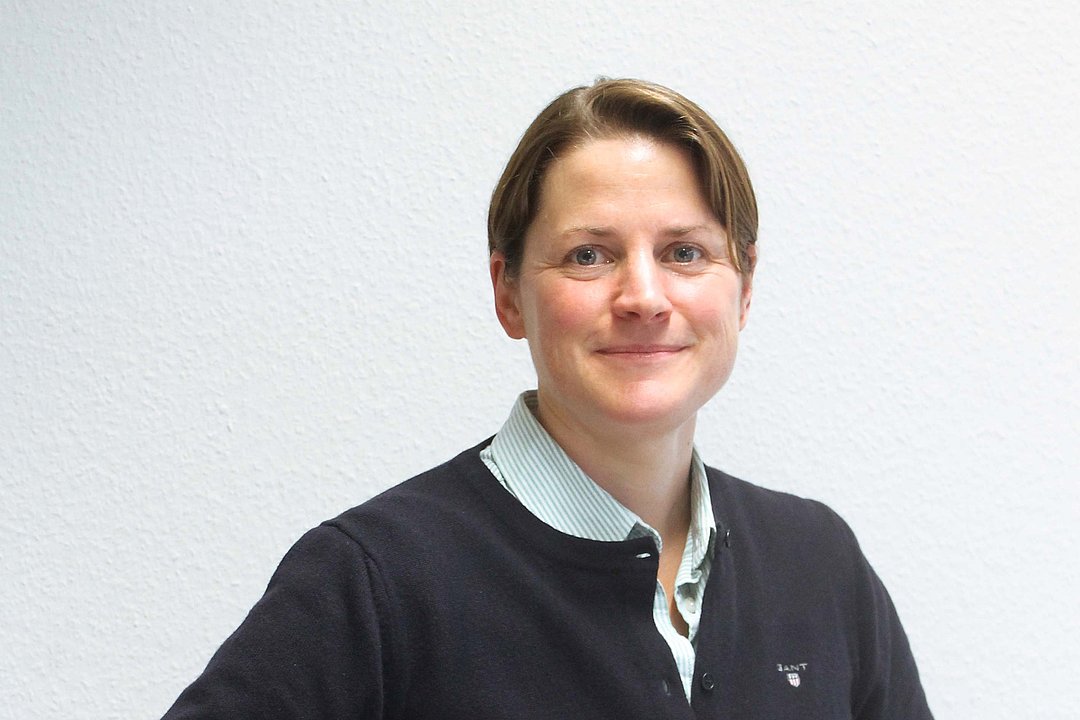
Inga Böhlke
Market segment 2 consumer packaging is reorganizing itself
The consumer packaging market segment’s sales department is reorganizing itself. So far, it has been subdivided into the three sales groups of food, non-food and hygiene. In the future, its organization will be oriented towards the functions: There will be a key account management team and an internal sales team. The technical service team will remain as it is. A new business development team will be added.
The employee magazine spoke to Inga Böhlke (B), head of the consumer packaging market segment, about how this change came about.
Ms. Böhlke, what prompted the reorganization of the consumer packaging market segment’s sales department?
B: Andreas Stiegemeyer, the head of the food sales group in market segment 2, will be embarking on his well-deserved retirement in the foreseeable future. This raised the question of whether to look for a successor or to completely rethink our organizational structure. It is also a well-known fact that we are facing major challenges in our markets.
Who thought about this? HR, the executive board, and you?
B: That might have been the case, but wouldn't it be better to discuss it with the employees who are affected and who know what’s involved? So in September 2024, we invited employees from the three sales groups from market segment 2 and a few other colleagues to a workshop. Dr. Rebekka Skubinn and I acted as the presenters.
How open was the process?
B: It involved genuine participation. Which is why we said that we wanted to arrive at a group result, a team result, and present it to the executive board.
What were the core questions?
B: First, we carried out an analysis. What are our objectives and tasks? What do we want to achieve for Bischof+Klein? What can we already do very well and where do we need to improve? Which risks are involved? What was clear was that the new structure would have to maintain our strengths and eliminate our weaknesses.
Which methods did you apply?
B: We used formats similar to those in the cultural workshops. That also involved playful components, simply to clear our minds and stimulate creativity.
Did it work?
B: Yes, and the result came as a complete surprise: The employees divorced themselves from the sales group structure, something that I hadn’t anticipated. So far, our organization has been market-oriented: food, non-food, and hygiene.
Now, however, we have a functional orientation. We have a key account management team and an internal sales team, which is managed at sales manager level. The technical service team will remain as it is. A completely new business development team has been added, because market segment 2 has to access new markets for Bischof+Klein. These new positions have been advertised.
That has had significant consequences for some employees …
B: It certainly has. From that point on in our considerations, nothing remained the same for the non-food and hygiene sales managers, for example. They were compelled to ask themselves what job they would be doing in the future. Whether it would suit them and what form it would take. I found that extremely courageous and incredibly professional. Divorced from their own persons, they thought about what would be best for Bischof+Klein. Only then did they look at where they might position themselves.
The employees in your department, all of whom are well known within the company, had to reapply. Why?
B: In January, we formulated tasks and responsibilities for the new functions in a workshop. The people who were involved in this were the same people as in September. The HR department then advertised the positions internally. We wanted to be transparent and open up the opportunities in our company to all comers.
All of the employees in market segment 2 were prepared to go through a normal selection process. I find that remarkable as well.
What happens now?
B: The new positions were assigned at the beginning of February. The first workshop with the new management team took place immediately afterwards. Numerous questions need to be clarified, for instance, regarding cooperation between the market managers and internal sales, if they are now no longer comprised in one single sales group.
Won't a lot of knowledge about customers be lost in the process?
B: That is a question that is often asked. A new mindset is needed in this case so that we don't endanger our strengths. We have to be aware that, even in the past, knowledge about customers did not come from the organizational structure, but from people. They and their knowledge are there. What is important is how they work together.
What exactly does that mean?
B: We are now conducting a series of workshops in order to proceed transparently and in the spirit of the new “we.” We have to understand what makes us tick and what we need so that we can work together productively. What are our personal values and what is important to us in our collaboration? What form do decision-making processes take? How do we communicate? What is our common vision? We want to develop the principles of collaboration together.
Is this change process exemplary for other departments?
B: Our approach is exemplary to the extent that we have used the new “we” and our experience from the cultural transformation workshops here. Every department can implement this in exactly the same way. The result is tailored to the needs of market segment 2. What is specific to our segment is the high conversion level with a very high need for internal and external coordination. We are determined to become even better in this area.
Categories
- Foreword (1)
- News (6)
- Title topic (2)
- Innovations from Bischof+Klein (3)
- Packaging trends (1)
- Megatrends (1)
- We at Bischof+Klein (3)
- Our locations – Bischof+Klein Lengerich (5)
- Our locations – Bischof+Klein Konzell (8)
- Our locations – Bischof+Klein France (4)
- Our locations – Bischof+Klein Polska (5)
- Our locations – Bischof+Klein UK (4)
- Last but not least (1)
- article overview