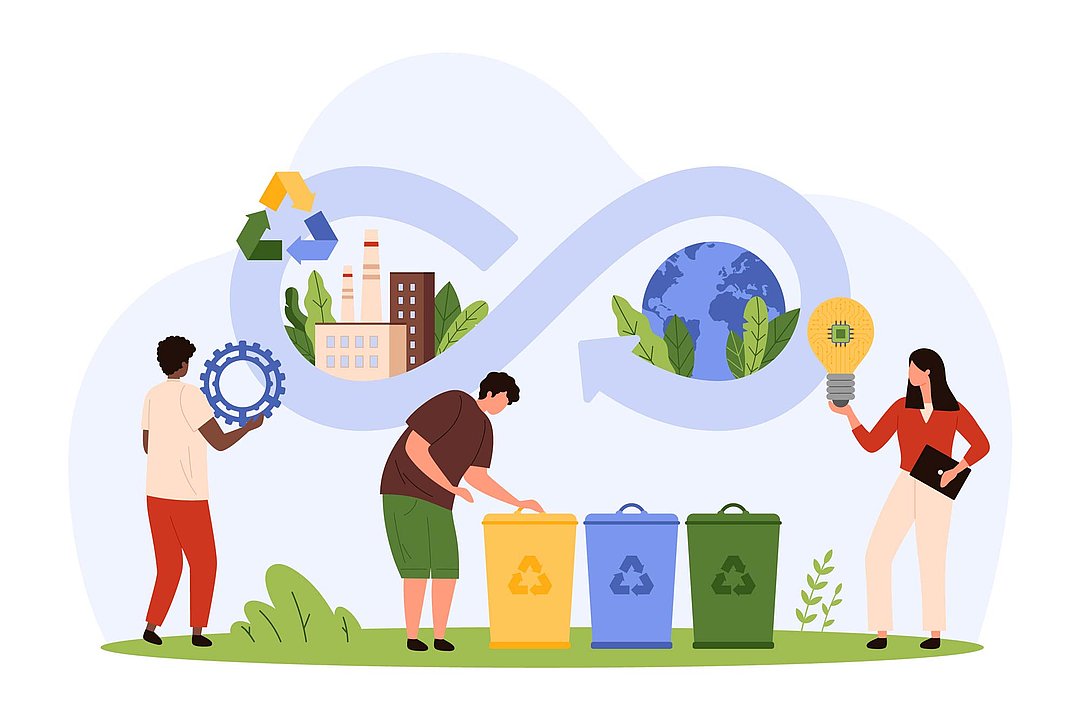
Objective is a closed-loop cycle
Circular economy
PPWR demands increased recycling for plastic packaging
These four letters keep cropping up everywhere. They stand for the EU Packaging and Packaging Waste Regulation. Its objective is to ensure that materials are kept in the economic cycle instead of becoming waste. In this context, the EU has issued its own regulations for various products such as textiles or batteries, for instance. The PPWR deals specifically with one of Europe's main waste streams – packaging.
But what exactly does “recycling packaging” mean? And what does the PPWR do to ensure this? Our new colleague Amelie Wolfgart explains what this involves:
“Packaging that can be recycled multiple times is often not suitable for our customers and their respective products. This is why our consumer packaging, for instance, (hopefully) ends up in the plastic recycling bin after use. If we design our packaging to be recyclable, which is already frequently the case, there is a realistic likelihood that toilet paper or dog food packaging will be turned into plastic granules again.
Precisely this is one of the major components of the new regulation: Packaging must be extensively recyclable by 2030, otherwise it can no longer be sold. Improved recyclability will lead to an increase in the volume of recycled plastic. This dovetails with the second major component of the PPWR: It specifies that packaging must contain at least 35 percent recycled material by 2030 and as much as 65 percent by 2040. (Different rates apply to food and pharmaceutical packaging). This is how the cycle is intended to be closed.
These ambitious goals necessitate the efforts of all companies along the supply chain. The packaging design must be closely examined and adapted according to the PPWR criteria if necessary. Bischof+Klein is working intensively and successfully on this (see “Innovations” rubric). Until now, for example, aluminum has been the material of choice for aroma protection in coffee packaging. However, it hinders recyclability and is therefore being replaced. Our pioneering products in the “tissue” segment already contain up to 80 percent recycled material and are almost completely recyclable. With many products, it is a balancing act, because the use of recycled material in our films must not affect the quality or performance of our products, of course. Technological expertise and innovativeness are needed.
The challenges are diverse, not just for us: Transparent plastic granules are often required for new packaging, but the majority of waste is colored. Ideas for solutions are also available here: One of our printing ink suppliers is working on technology to remove printing ink from the end products, thus enabling printing ink-free plastic granules to emerge from the recycling process.
Innovative technical solutions and creative ideas are still needed to close the cycle, as well as partnerships along the supply chain.”
What can you do? At Bischof+Klein: Proactively contribute your ideas!
And at home? Proper waste segregation increases the likelihood of plastic genuinely being recycled.
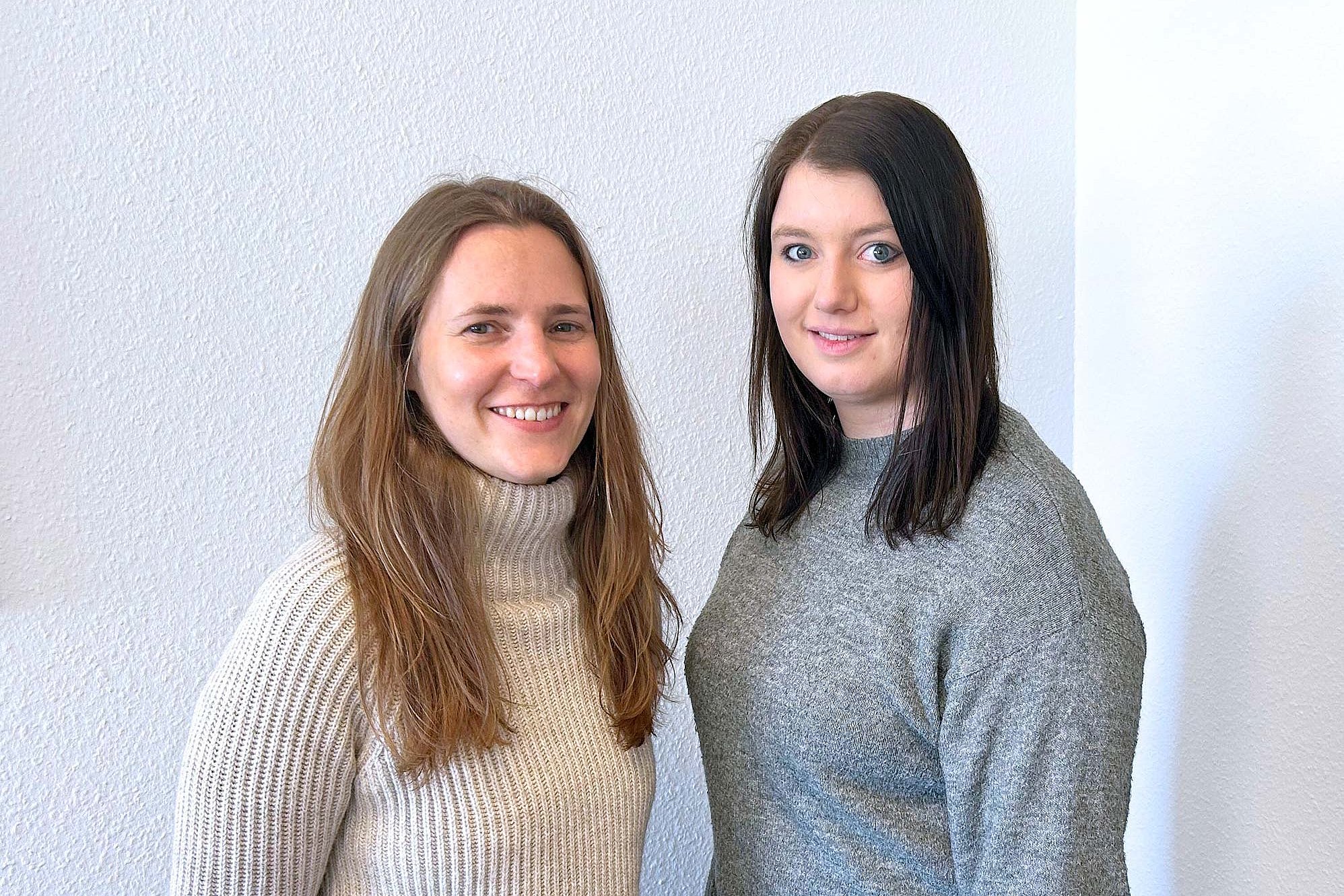
From left: Amelie Wolfgart and Julia Walman
Categories
- Foreword (1)
- News (6)
- Title topic (2)
- Innovations from Bischof+Klein (1)
- Packaging trends (1)
- Megatrends (1)
- We at Bischof+Klein (2)
- Our locations – Bischof+Klein Lengerich (8)
- Our locations – Bischof+Klein Konzell (4)
- Our locations – Bischof+Klein France (2)
- Our locations – Bischof+Klein Polska (5)
- Our locations – Bischof+Klein UK (4)
- Last but not least (1)
- article overview